
How a Local Community in Kenya Brought Their Ocean Back to Life
Elders in the village wistfully recounted how full of life the sea had once been.

“When an NGO donated mosquito nets to our village to protect our families,” he says, the corners of his eyes welling up, reflecting the cloud-softened rays of the midday sun, “we turned them into fishing nets so we could feed them.”
On a balmy winter morning, we had turned off the unbusy highway in a tuk-tuk, driven past a village with thatched huts and small concrete houses, crossed majestic wide-trunked Baobab trees, felt our bones rattle on a bumpy gravel road, and finally arrived at our destination: Kuruwitu. A well-built Kenyan man named Jon, who I guessed to be in his forties, had welcomed us, offered us snorkel masks and a pair of water shoes, and showed me to a ramshackle wooden hut that doubled as a storage area and changing room.
Wearing full sleeves and long pants over my swimsuit to protect myself from the fierce rays of the sun, I emerge and we follow Jon.
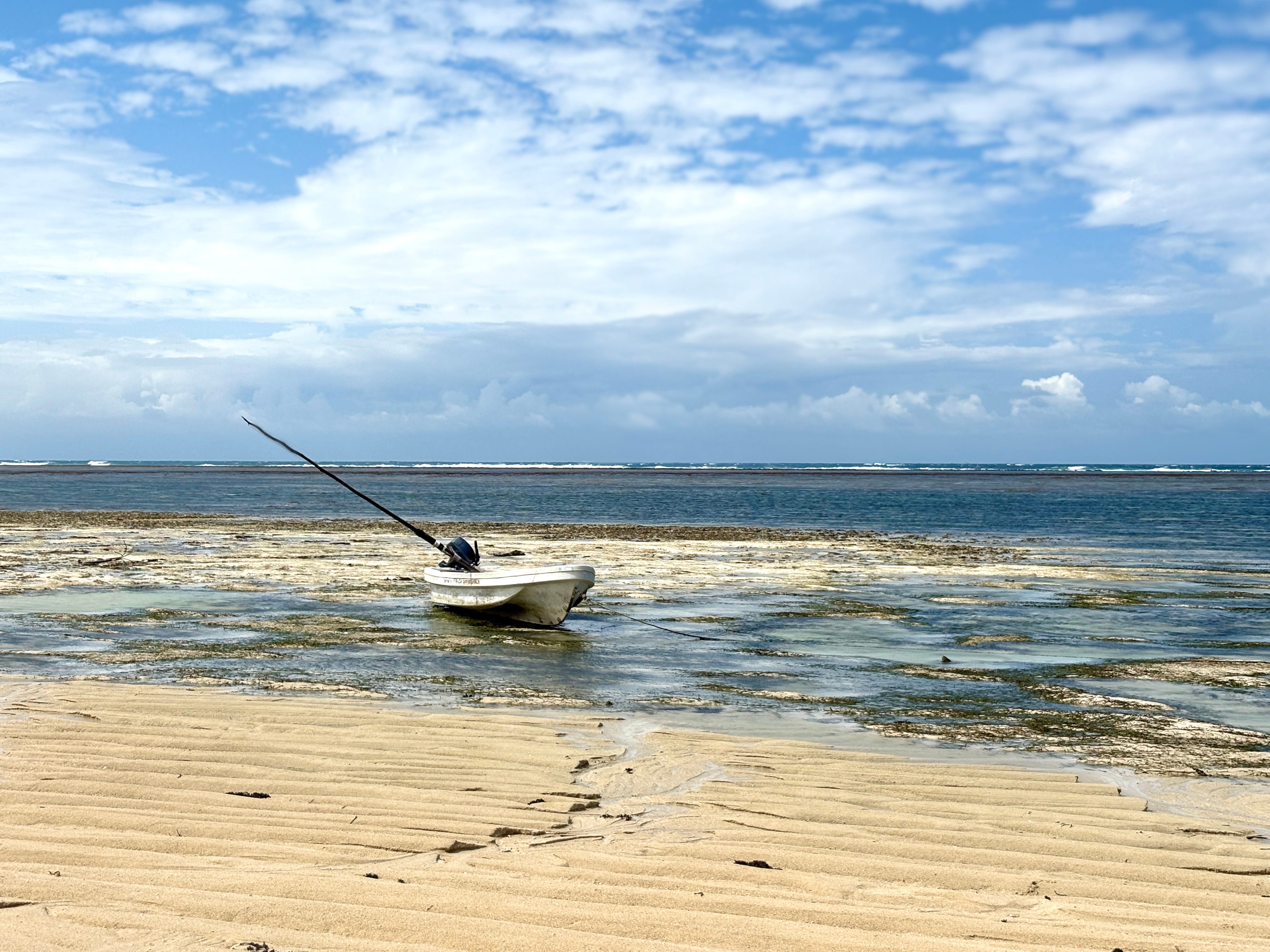
A short walk away lies the vast Indian Ocean. It is low tide and the water has receded far, leaving behind smooth trails of sand interspersed with shallow pools of water. Shades of blue dance on the ocean, reflecting the crystal blue sky above. Under my water shoes, I can feel the wetness of the sand but not its softness. Jon urges me not to give in to the temptation to go barefoot, because too many black sea urchins have started showing up in the water.
Unlike the coastal scenery I’ve become used to over our month of slow travel in coastal Kenya, I see hardly any fishing boats in this part of the ocean. Jon explains that indeed, we are in a Marine Protected Area (MPA) - the 30 hectares of water before us is protected from fishing. In 2003, with Jon as a founding member, the local community in Kuruwitu had cordoned off the area, and put in place rules for the community to oversee its management.
For more than half an hour, with the sun beating down on our faces, we follow Jon into the shallow ocean. The rock pools all around us are filled with spiky little bodies - the sea urchins he had warned us about. Careful not to step on one, or worse, slip on the rocks and fall face first on their spikes, my mind darts back to something I’d heard in Chile, and then again in Thailand - too many sea urchins have started showing up in the water.
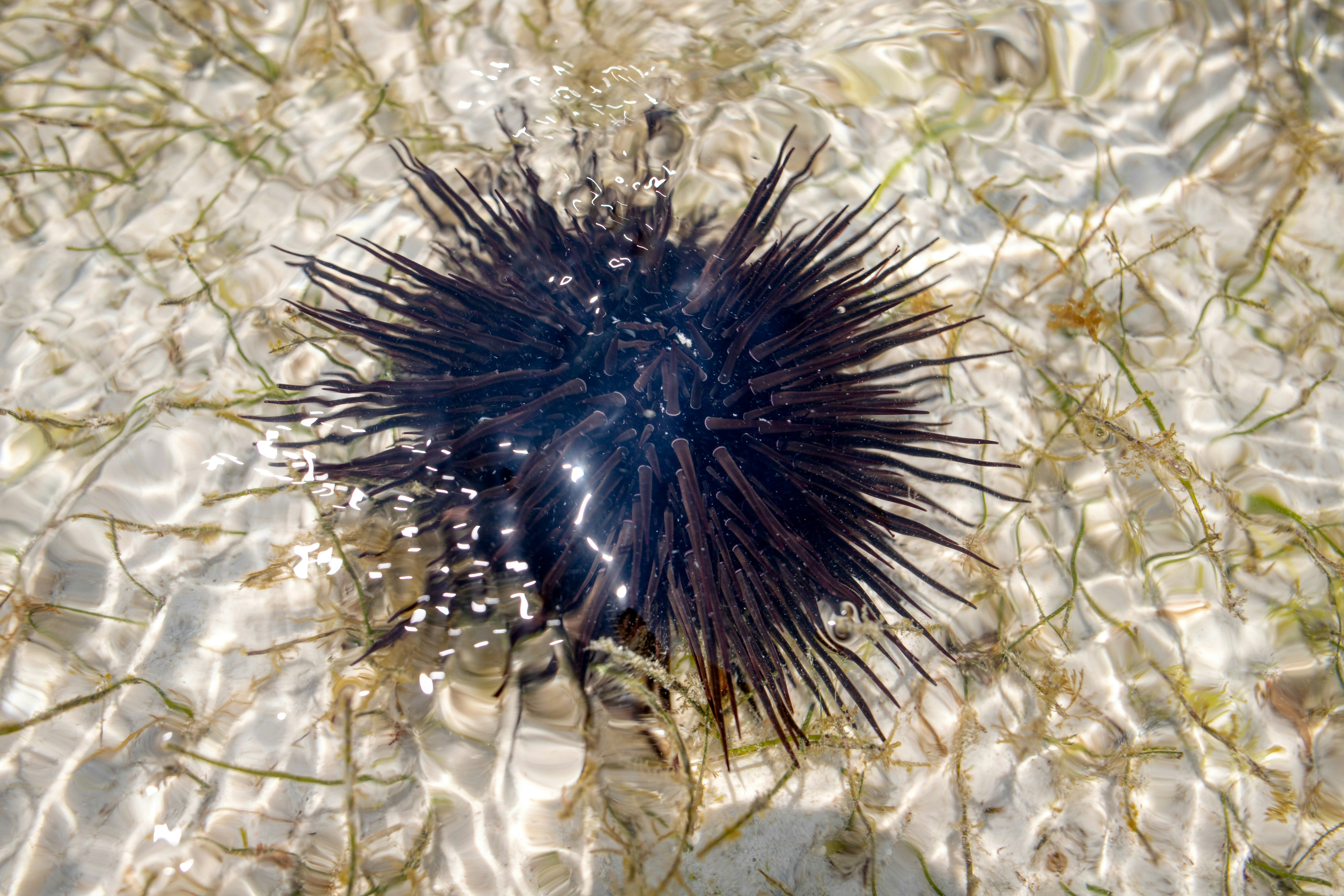
I would later read that sea urchins have long helped balance marine ecosystems. They feed on algae, and keep coral reefs safe from excess algae growth. In turn, they are food for certain species of lobsters and otters. Due to overfishing however, their predators have been greatly reduced in number. And due to the rise in ocean temperatures because of climate change, they have spread to once cooler waters. As they multiply uncontrollably across the world’s oceans, they overgraze on underwater kelp forests (made of algae) and turn the ocean floor into an “urchin barren” - a wasteland with no vegetation. Thus destroying the habitat of several marine species, as well as a key source of CO2 absorption, further accelerating climate change! Cleverly enough, once they overeat all the algae around them, they go into hibernation until the vegetation starts to come back.
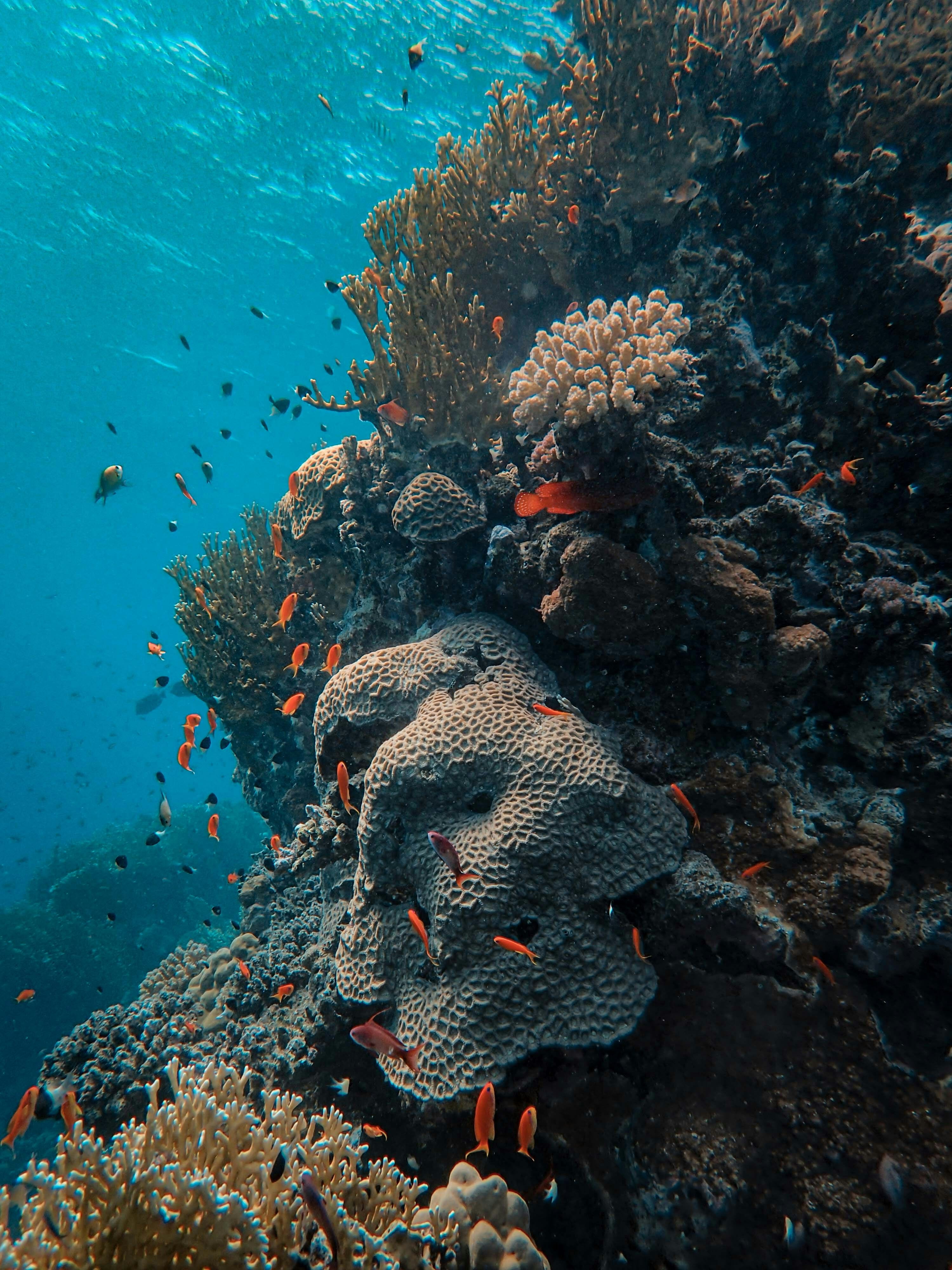
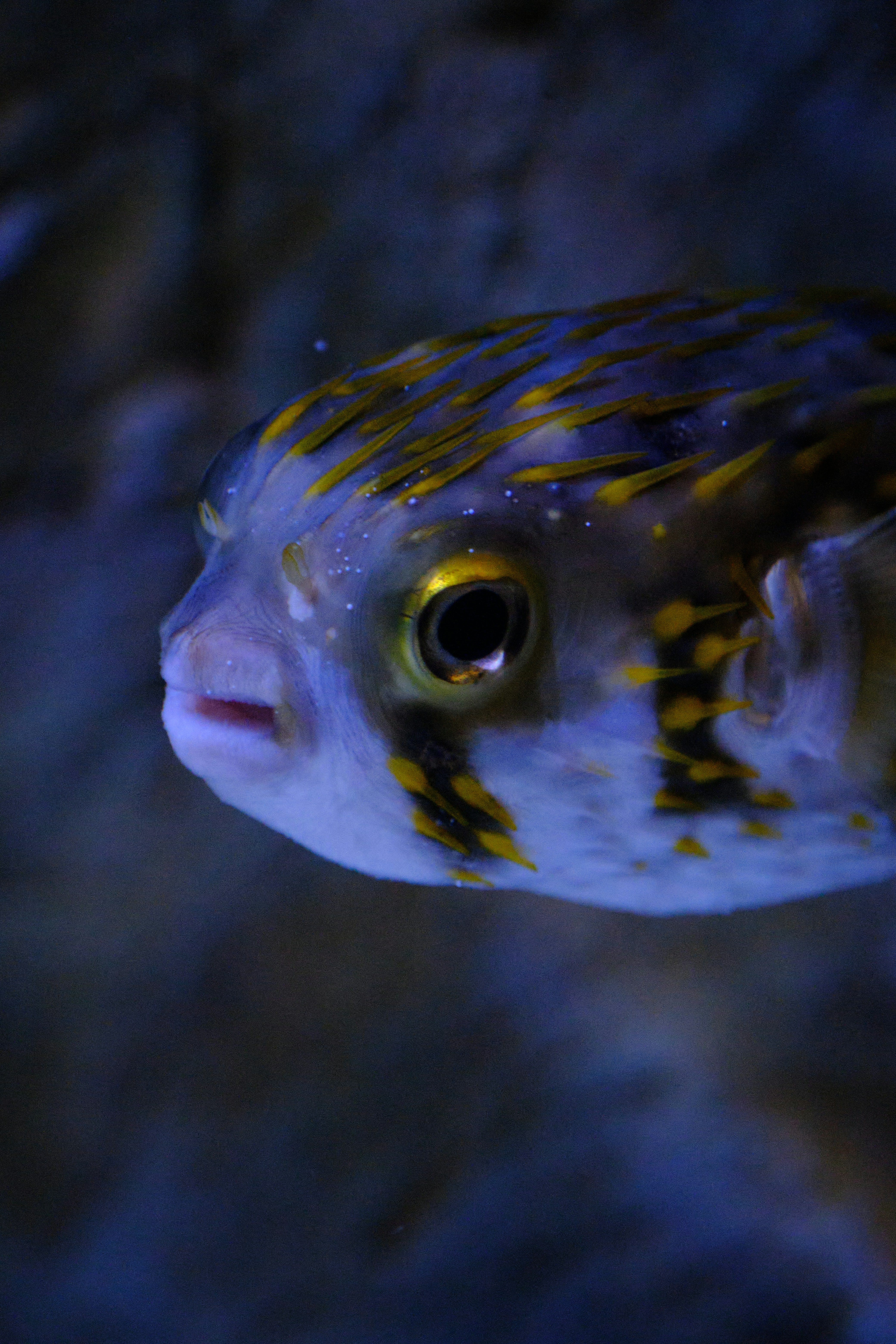
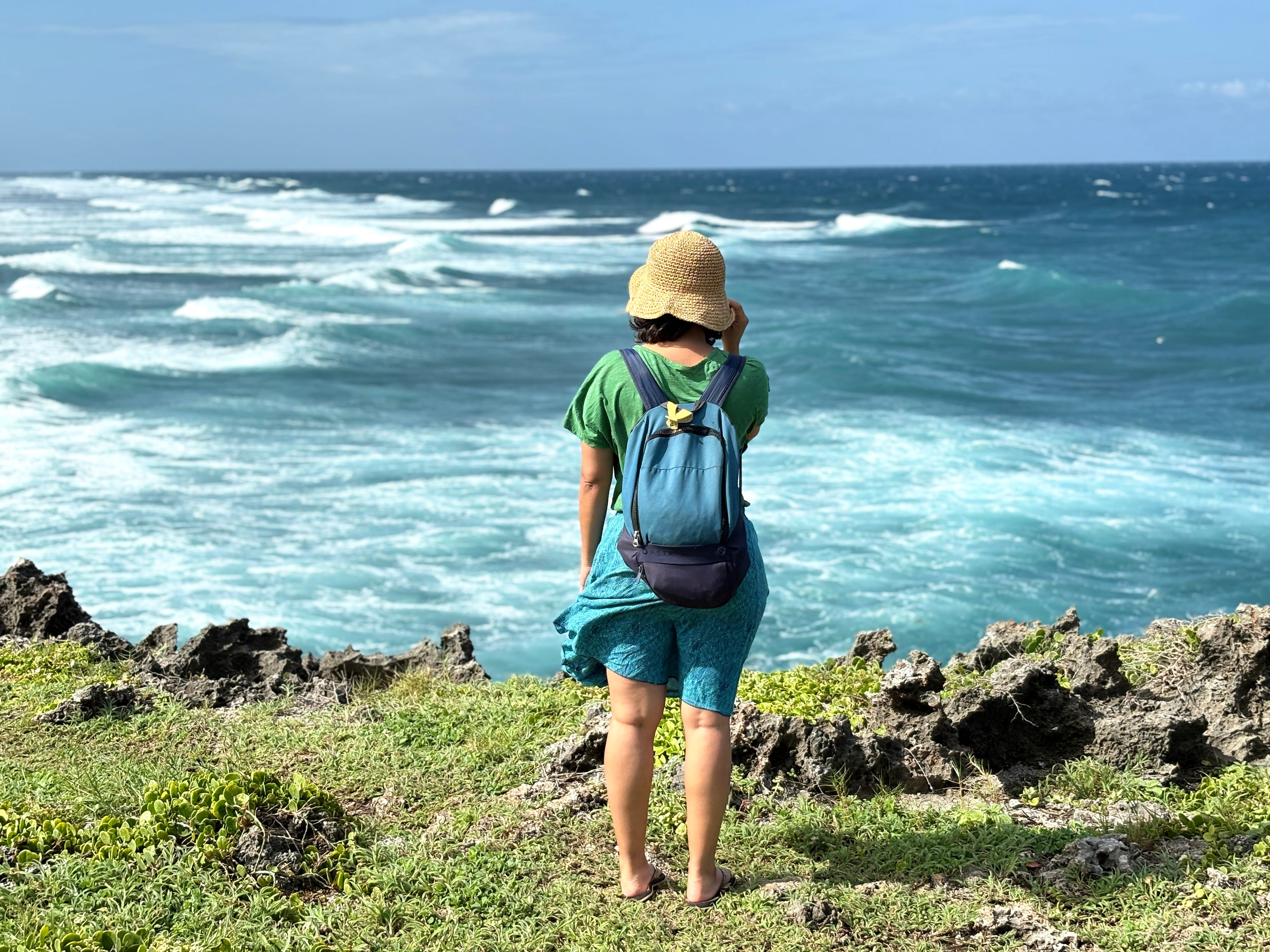
As I cautiously follow Jon’s footsteps, he stops, bends down, grabs a sponge from the seabed, and scrubs our snorkel glasses clean. Better than any chemical cleaners, he says. We finally put on the snorkeling gear and plunge ourselves into the warm ocean. My eyes take a moment to adjust, from the blinding glaze of the sun above to the colorful blue water below. I take a deep breath through my snorkel tube as schools of tiny orange fish swim past me, and marvel at the stunning corals surrounding me. As I swim along, I spot fish of all colors and sizes: yellow butterflyfish, spotted porcupine fish, red featherstars, striped Indo-Pacific damsel and thorny starfish. Further along, I see metal stands on the seabed, covered in young coral and curious fish – signs of ongoing efforts to restore corals in the MPA.
I lose track of time in the wild and wonderful underwater world, and when I finally emerge, we hear from Jon about the incredible transformation of this part of the ocean. In the late 90s-early 2000s, Jon tells us in his matter-of-fact manner, this area was nearly devoid of fish. The village community, entirely dependent on fishing as a source of food and livelihoods, was in a dire situation. Jon recalls a late night meeting, when elders in the village wistfully recounted how full of life the sea had been just a few decades ago. Overfishing, as well as the extraction of fish and corals to sell for use in aquariums, had dangerously depleted the fish and coral stock. Desperate economic need forced young fishermen like him to turn mosquito nets into fishing gear, so they could feed their families. Weather changes and warmer waters further threatened the ocean - and their lives.
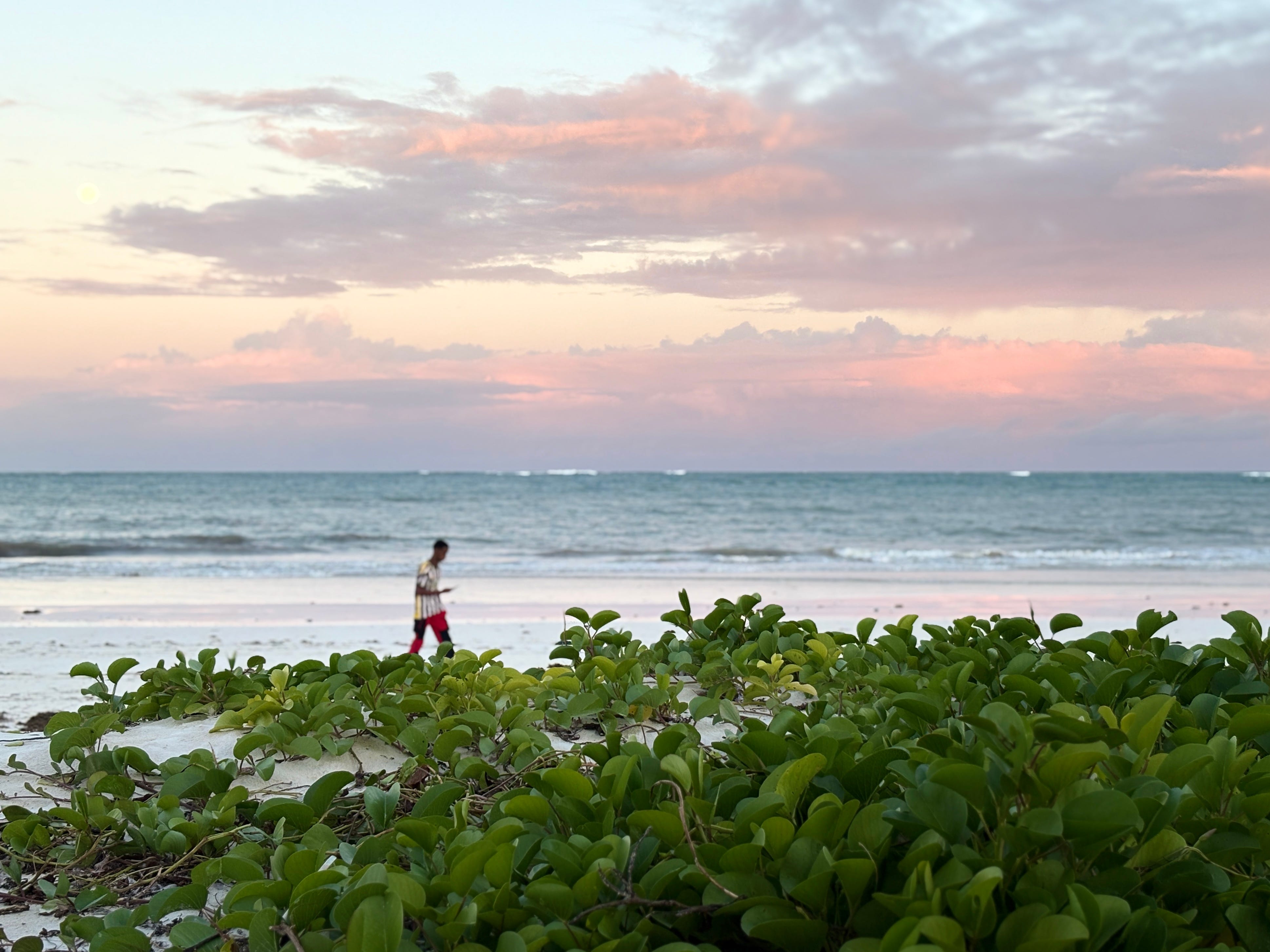
The community decided to take action, and laid the foundation for Kenya’s first coral-based community-managed MPA. No fishing was allowed in the protected area, enabling gradual growth in the fish diversity and volume. It quickly became a breeding ground for fish from the rest of the ocean. As biodiversity in the ocean grew, tourism became an alternate source of income. Conservation grants also helped the village bounce back economically. Plodding through the ocean on our way back, we ran into a crew from the Wildlife Conservation Society of Kenya, who’ve been working to regenerate corals in the MPA - evidence of which I found in the coral stands buzzing with life underwater.
A few days ago, when I had asked a local for suggestions on snorkeling spots in the vicinity, he had casually mentioned Kuruwitu, saying nothing about the inspiring community-led conservation journey behind it. Perhaps that’s the beauty of travel today: we can journey in search of our planet’s wonders, and stumble upon inspiring ways to protect it.
Support Kuruwitu’s community-led ocean conservation work:
Travel: Join them for a snorkeling day trip and lunch
Volunteer: Join their program for local and overseas students
Learn more: kuruwitukenya.org
Contact: projects.kuruwitu.cbo@gmail.com | +254 799084925
Sources: Ocean.org | Oregon State University
Cover image: Francesco Ungaro (Unsplash)
This newsletter is changing
I started The Shooting Star Insider as a space for personal reflection and a call to embrace slow travel. Now with a growing community of 14,000+ readers, I’m transforming it into a newsletter about travel (and life) on an awe-inspiring planet.
In each issue, I will take you to a different corner of the globe, on a journey rooted in conscious travel, community resilience and climate action. A reminder that we need to protect this wild and beautiful world we’ve inherited, and inspiration from how others are doing it in their own corners of the world.
I hope you’ll stay for these stories, and share them with people who not only love to travel but also care about our planet.
Rootless and Restless: Book updates
I returned to Berlin a couple of weeks ago, with a heart full of gratitude, a body full of exhaustion, and a bag full of notes, letters and postcards that you gave me at my book launch events in Bir, Delhi, Mumbai and Bangalore <3
Rootless and Restless is now available at your favorite bookstores across India! Physical bookstores find it challenging to compete with Amazon’s wholesale rates, so if you can afford to, pick up your copy at a brick and mortar store.
The reading community Read A Kitaab gave the book a beautiful recommendation - “The book left me wanting another chapter.”
Thank you for coming to my book launch in Bangalore, at Champaca and Copper + Cloves Indiranagar! We were a packed, packed house (sorry the air conditioning couldn’t keep up ;-)), and I loved meeting and signing copies for so many of you!
The book is featured in the Air India inflight magazine’s June issue, along with my cover story on regenerative travel in Bali. If you’re taking an Air India flight this month, check it out.
I was invited to sign copies at some amazing bookstores in Bangalore. You can pick up a signed copy at: Higginbothams, Book Hive, Blossom Book House, Gangarams Book Bureau and The Bookworm.
The Earth Book Club recommended Rootless and Restless, for it’s not just a travel memoir.
Watch
In May, I was invited to the India Today studio in Noida to chat about seeking human connections while travelling, books in the age of Instagram, and why I decided to write my second travel memoir Rootless and Restless.
Days later, we found out that Suyesha, the host of this show, is related to my high school friend. Small world!
My stories elsewhere
Stories I’ve written, as well as social media posts I’d love for you to check out.
Blog:
Instagram:
I saw your post about this on Instagram yesterday, and it brought me so much hope (and tears to my eyes 🙂).
I like this because it shows conservation as something a community can build, not something imposed from outside. The ocean recovered because people who depended on it made a hard choice together. How do we support more community-led conservation without turning it into another outside project?